
Translating and adapting an article
I need to rewrite the article in French while adapting it for a French audience, making sure to keep the original length and structure. I’ll preserve subheadings like
and
and keep ![]() tags unchanged. The original text is in Spanish, so I’ll translate it to French, mentioning relevant context like the Mediterranean Sea. For terms like "gorgonia," I’ll use "gorgone" as the appropriate French equivalent. The goal is to accurately convey the original content while ensuring it fits French cultural references.Clarifying terminology in French
tags unchanged. The original text is in Spanish, so I’ll translate it to French, mentioning relevant context like the Mediterranean Sea. For terms like "gorgonia," I’ll use "gorgone" as the appropriate French equivalent. The goal is to accurately convey the original content while ensuring it fits French cultural references.Clarifying terminology in French
I’m trying to figure out whether to use "gorgonie" or "gorgone" in French. I remember that the species Paramuricea clavata is known as "gorgone rouge." The correct singular form seems to be "gorgone." In general, "gorgonie" is the French term referring to the order Gorgonidae. Wikipedia mentions "gorgonies" when talking about them. I also note that "gorgonia" translates as "gorgonie" in French. To be safe, I’ll use "gorgonie" for common terms and "gorgonie" or "gorgonies" as plural when needed.Examining article terminology
I need to look closely at the article titled "Qué es y características de la gorgonia," which translates to "Qu’est-ce que la gorgonie et ses caractéristiques" in French. "Gorgonie" seems to refer to "gorgonie" in French, while "gorgone" is likely the more standard term. I think "gorgonie" is widely used, so I’ll stick with that. For sea fans, "gorgone" is singular and "gorgonies" is plural. Since the article is lengthy, I’ll make sure my French version matches the original’s length while using appropriate terminology.Translating and adapting content
I’ll be translating and adapting several sections, starting with the introduction. It describes gorgonias, stating, "La gorgonia es un tipo de coral marino blando…" I’ll translate this to: "La gorgonie est un type de corail marin mou qui appartient au groupe des Cnidaires dans la classe des Anthozoaires et possède des caractéristiques uniques." It continues discussing its structure, mentioning "gorgonina." I think I’ll go with "gorgonine" as the appropriate term in French. It’s identified as a protein, so I’ll ensure I keep that context. This sets a clear path for the rest of the adaptation!Translating and structuring the article
I’m set to translate and adapt the article sections, starting with the title "Qué es y características de la gorgonia" to "Qu’est-ce que la gorgonie et ses caractéristiques." I’ll keep all tags unchanged as per instructions. The subheadings will be translated, such as "Hábitat de la gorgonia" to "Habitat de la gorgonie" and "Alimentación" to "Alimentation." I’ll also ensure the content maintains similar lengths while removing any promotional sentences. Additionally, I’ll weave in relevant mentions of species within the Mediterranean context, like "gorgonie rouge" for Paramuricea clavata.Adapting the article for France
I need to adapt the article to reflect a French context. I’ll start by mentioning that gorgonians inhabit the world’s seas and oceans, then specify that in France, they are often observed in the Mediterranean and along the Atlantic coasts. I’ll ensure not to add any new information that strays from the facts; for example, I’ll include better contextual details about their habitat without exaggerating their presence. As I translate each section, I’ll keep it faithful to the original while ensuring it’s clear and coherent for a French audience.Translating gorgonian details
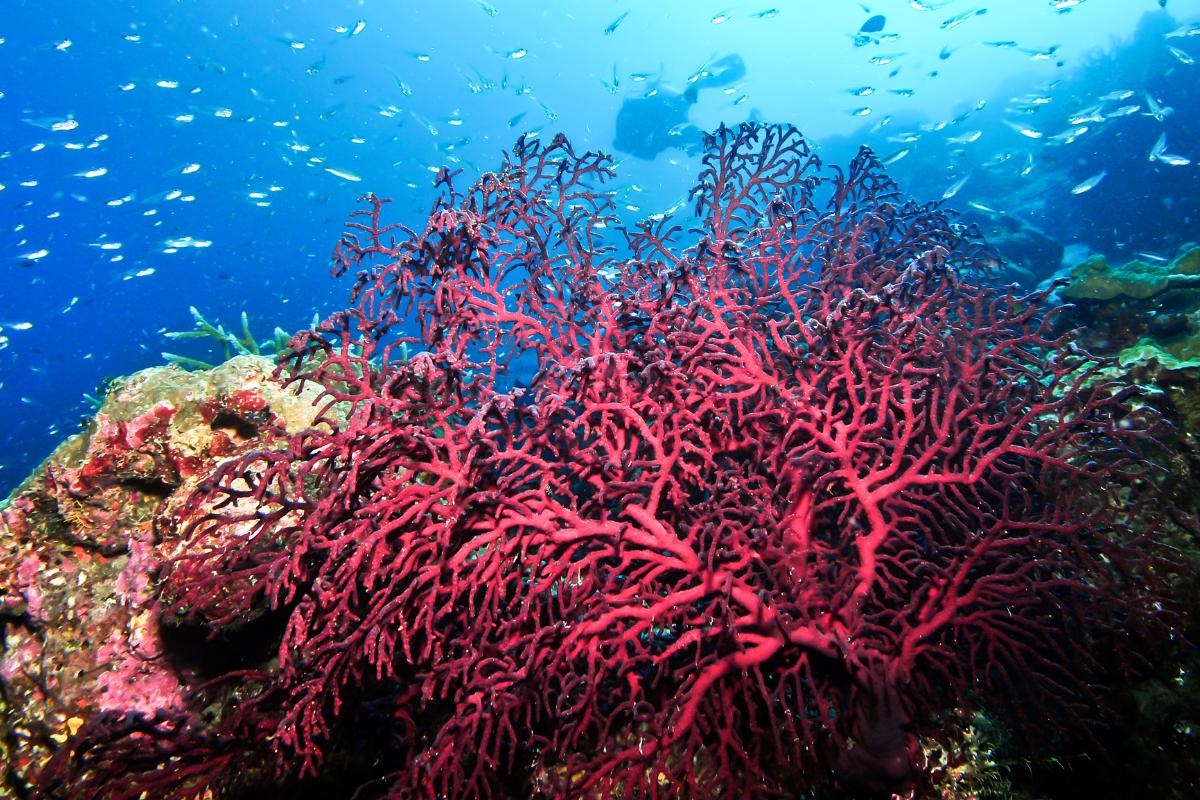
I’m translating this section about gorgonians while adapting it for a French audience. They host a variety of organisms like sponges and crustaceans, and I’ll highlight their stunning color variations from their calcium structures or symbionts.
I’ll carefully translate the details, ensuring to say they are long-lived, reaching full size between 10 to 30 years. It’s essential to mention their role as environmental bioindicators while removing any promotional content about other articles to keep it focused. As I continue with the habitat and feeding sections, I’ll maintain consistency and clarity in the French context.Translating gorgonian reproduction and conservation
I’m translating sections about gorgonian reproduction, first covering asexual reproduction where they can regenerate and form new genetically identical colonies. Then, I’ll explain sexual reproduction in some species, emphasizing how they release gametes in sync with environmental cues and that fertilized eggs develop into planulate larvae.
Next, I’ll shift to threats and conservation efforts, highlighting their vulnerability due to slow growth and late maturation. It’s important to provide details on the main threats, such as climate change, invasive species, and pollution while also mentioning conservation strategies like creating protected areas.
